
People
Meet the experts, researchers, and contributors behind advancements in fingerprint recognition and biometric security. Their work drives innovation and enhances the reliability of biometric technologies.
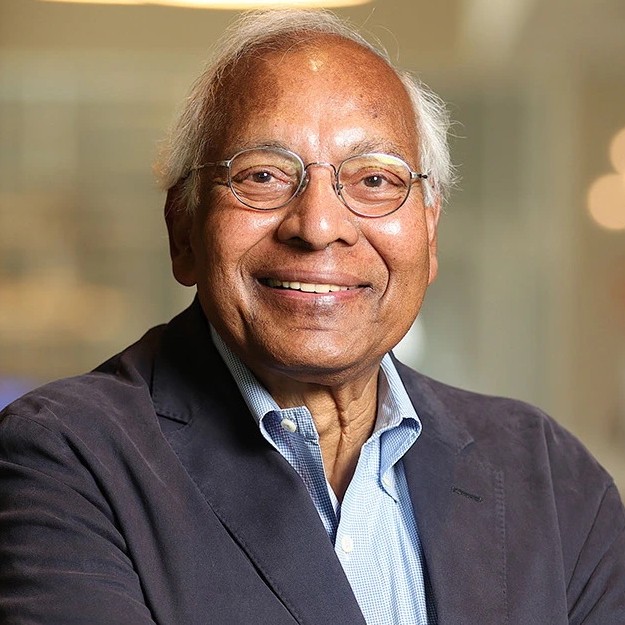
A pioneer in biometrics often dubbed “the father of fingerprint recognition”. Jain’s four decades of research produced foundational methods now standard in the field. He introduced filters (FingerCode) and hybrid matching techniques, and in recent years has led breakthroughs in latent fingerprint matching and deep learning representations (e.g., DeepPrint). He has also mentored dozens of scholars in fingerprint biometrics.
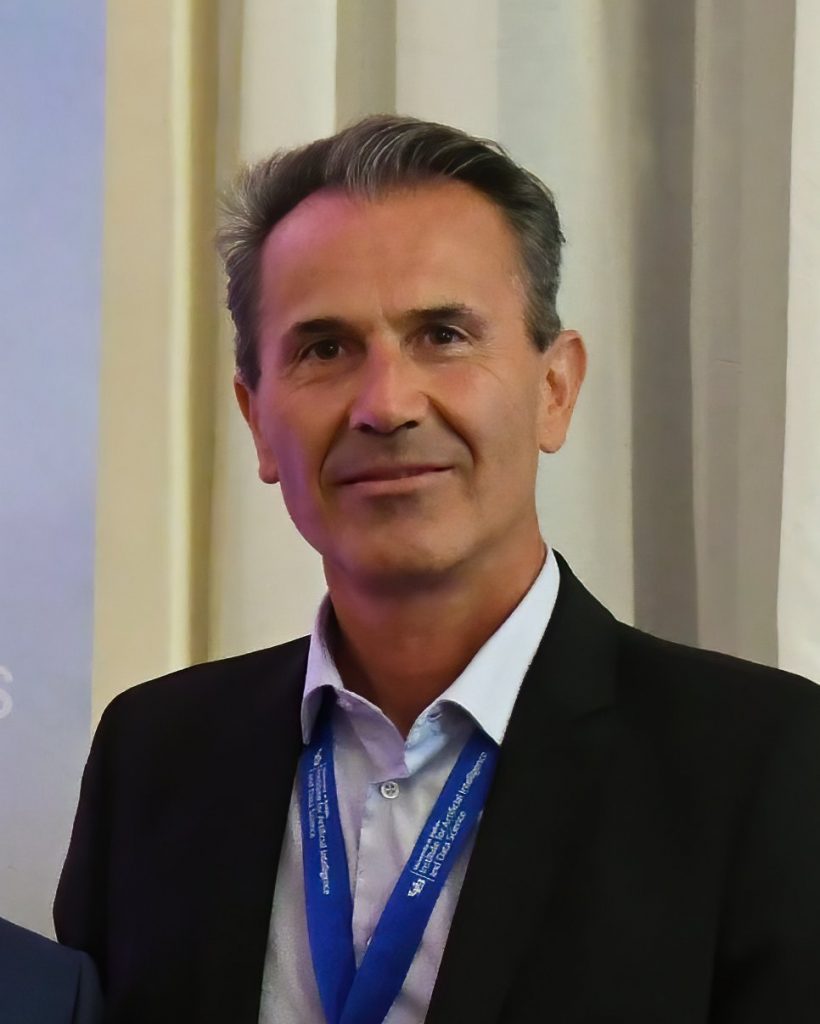
Co-director of the BioLab at U. Bologna and co-author of the Handbook of Fingerprint Recognition. Maltoni’s team is behind many influential contributions: the FVC competitions (2000–2006) which he co-organized spurred global algorithm development; the SFinGe synthetic generator (first tool to produce lifelike fingerprint images).

A researcher best known for inventing the Minutiae Cylinder-Code (MCC) descriptor. As Maltoni’s former student, Cappelli’s MCC (2010) introduced a paradigm shift to fingerprint matching by enabling fixed-length matching and effectively handling rotations and noise. He also developed techniques for generating identity-consistent synthetic fingerprints (an extension of SFinGe).
The majority of his practical research focuses on Biometric Systems, including areas such as fingerprint recognition, evaluating the performance of biometric technologies, assessing the quality of fingerprint scanners, as well as face recognition, palmprint recognition, and safeguarding biometric templates.
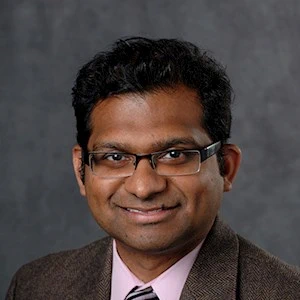
A leading researcher in pattern recognition and biometrics. Known for his work on multi-fingerprint fusion (combining multiple fingerprints to improve accuracy) and fingerprint anti-spoofing. He has also contributed to fingerprint template security (developing cancelable fingerprint templates) and socio-ethical aspects.

He is coauthor of the Handbook of Fingerprint Recognition (Springer 2003, II edition 2009, received the PSP award from the Association of American Publishers) and coeditor of the book Biometric Systems, Technology, Design and Performance Evaluation (Springer 2005). He is coholder of two patents in the area of fingerprint aliveness detection and one patent for fingerprint minutiae coding and matching.
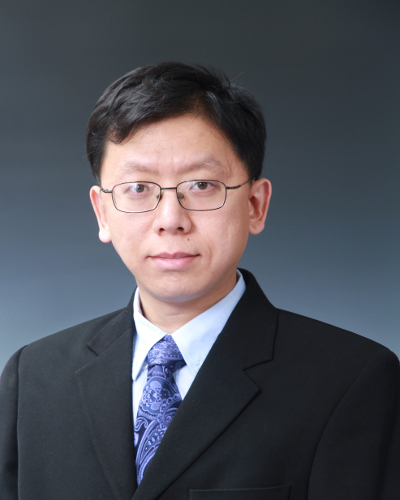
A prominent academic known for advancing the algorithmic science of fingerprints. Feng worked on latent fingerprint enhancement and matching (e.g., orientation field estimation in very low-quality prints) and on fingerprint distortion rectification (methods to correct nonlinear skin distortion so prints match better). He has also contributed to fingerprint template protection and was a co-editor of the 3rd ed. of the Fingerprint Handbook.

Key contributor in modern fingerprint research. He has first-authored innovative papers on attention-based fingerprint matching (AFR-Net uses vision transformers to outperform even some commercial matchers), on joint fingerprint recognition and presentation-attack detection (unifying matching and liveness via multi-task learning), and on latent print recognition (the 2023 local+global embedding fusion).
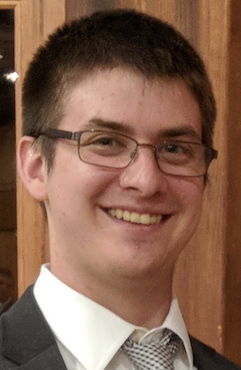
Engelsma’s doctoral research produced DeepPrint and advanced partial fingerprint matching. He showed how neural networks can learn fixed-length fingerprint features that rival hand-crafted methods. Engelsma also co-authored studies on contactless fingerprint matching and fingerprint synthesis (PrintsGAN for generating unlimited fingerprint training data).
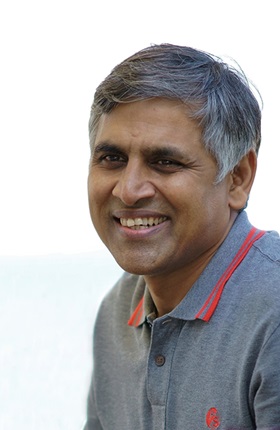
Pioneered hygienic contactless and 3-D fingerprint biometrics—authoring the first dedicated monograph Contactless 3D Fingerprint Identification and releasing PolyU’s benchmark touchless 2-D/3-D fingerprint databases that underpin many current studies. A Fellow of IEEE and IAPR, he led the IEEE Biometrics Council as President (2021-2022) and continues to drive the field forward through patented methods, open datasets, and high-impact research on multi-view 3-D fingerprint synthesis and matching.
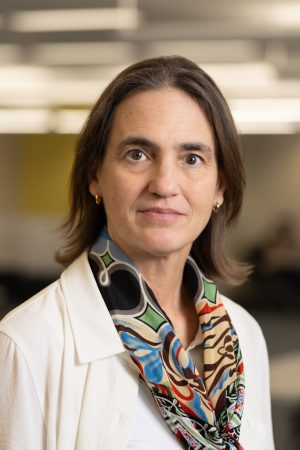
Leading expert on fingerprint liveness detection and device interoperability. Schuckers developed one of the first software-based liveness detection methods for fingerprints, using perspiration pattern analysis, which requires only the fingerprint image. This innovation paved the way for modern presentation attack detection in fingerprint scanners. Bank of America Distinguished Professor and Director of CITeR, IEEE Fellow (2023), and President of IEEE Biometrics Council.